After helping hundreds of families navigate the property decision, I have learned something important: There is no universally “better” city. But there is a better city for you. The difference comes down to five major factors: commute time, cost of living, schools, neighborhoods, and daily life. Get these right, and you pick the perfect city. Get them wrong, and you end up miserable. That is why I put together this complete guide to Norwalk vs Stamford. It covers everything you need to make an informed decision about which Fairfield County city is right for your family.
The Commute Factor: Easy Access to New York City
Credit: stacizampa.com
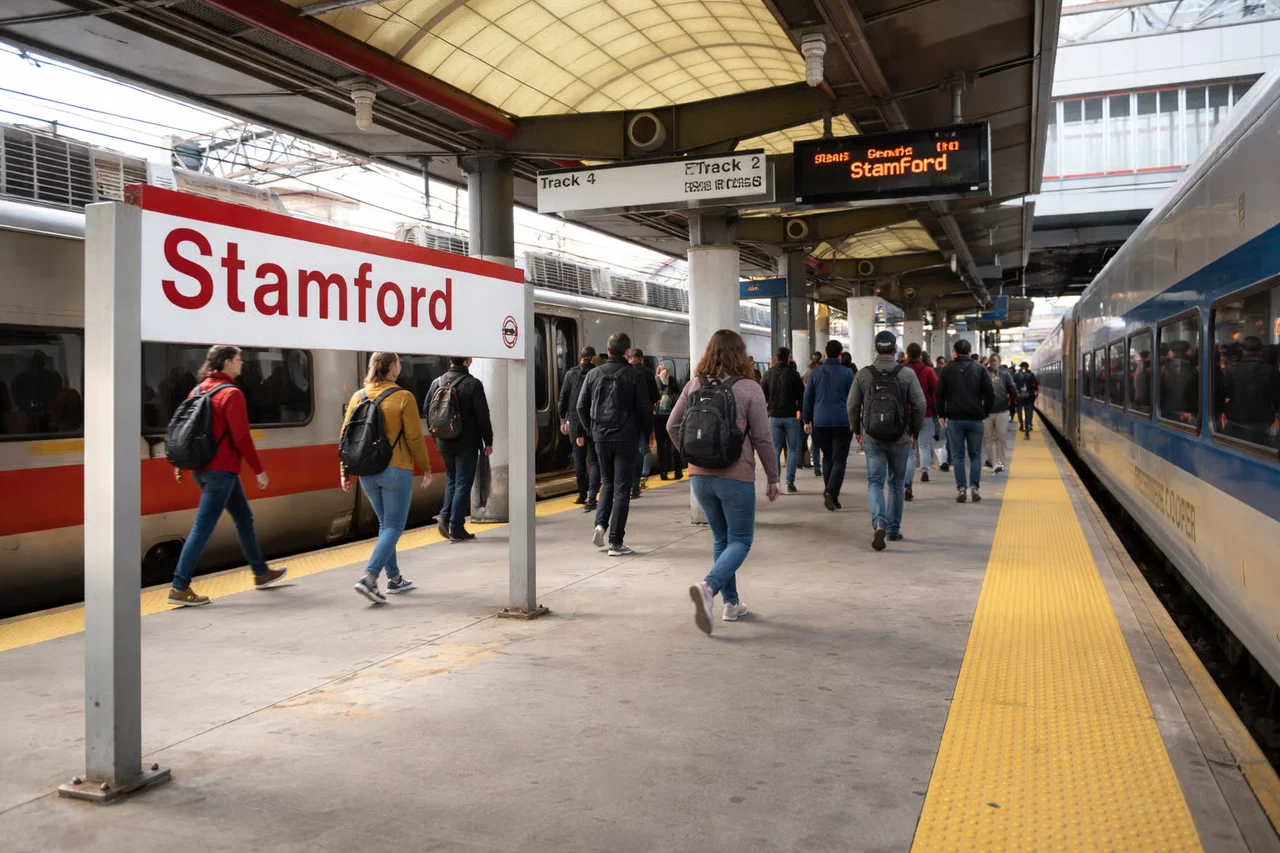
Let us start with the train. Because if you work in NYC, this decides everything.
Stamford
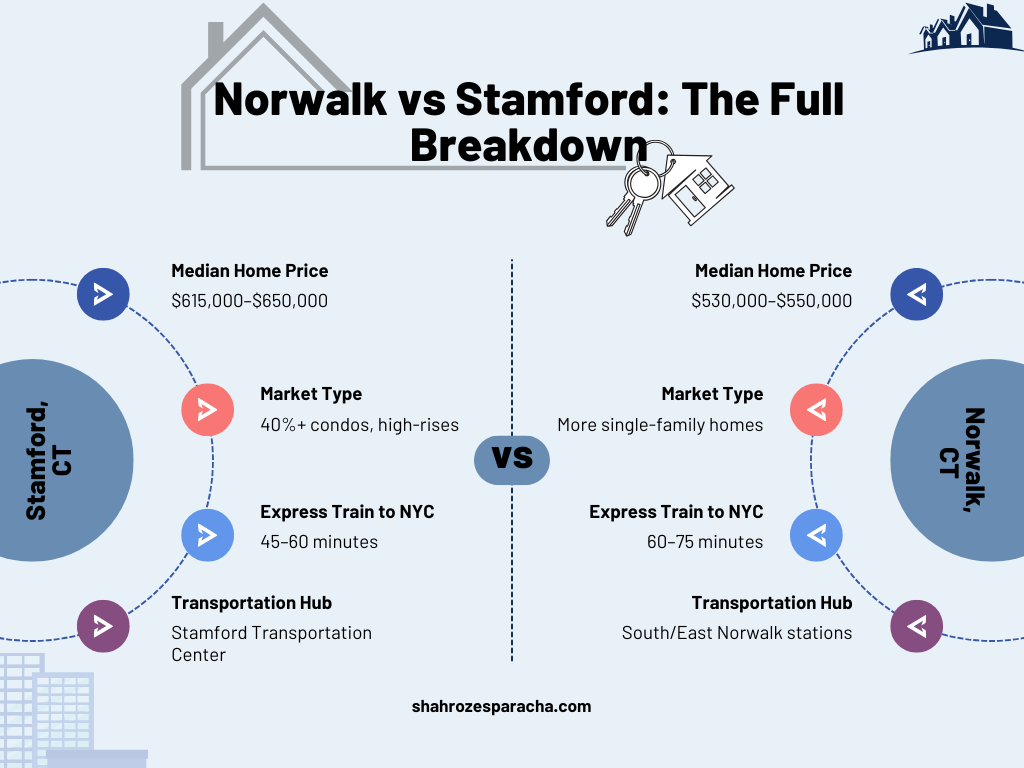
It is a major regional hub. It has Metro-North and Amtrak service at the Stamford Transportation Center. The express trains hit Grand Central in 45 to 60 minutes. That is really fast.
Downtown Stamford and Harbor Point are a short walk from the station. You can leave your apartment and be in Midtown in under an hour. That easy access to the city is hard to beat. For professionals wanting proximity to New York, Stamford wins.
Norwalk
From South Norwalk or East Norwalk, plan 60 to 75 minutes. That is about 15 to 20 minutes more each way. Over a year, that adds up.
But here is the thing. If you only commute two or three days a week, that extra time may not matter. Some families trade the shorter commute for more space and lower costs. It is a personal call.
Winner for commute: Stamford wins if proximity to New York City is your priority.
Cost of Living & Real Estate: Norwalk vs Stamford Pricing
Credit: realtor.com
Now let us talk money. This is where things get real. The cost of living in Stamford, CT, is higher than in most places. The median home price sits around $615,000 to $650,000. For property for sale in Stamford, CT, expect $650,000 to $900,000+ for a decent single-family home. Price per square foot runs $320 to $380.
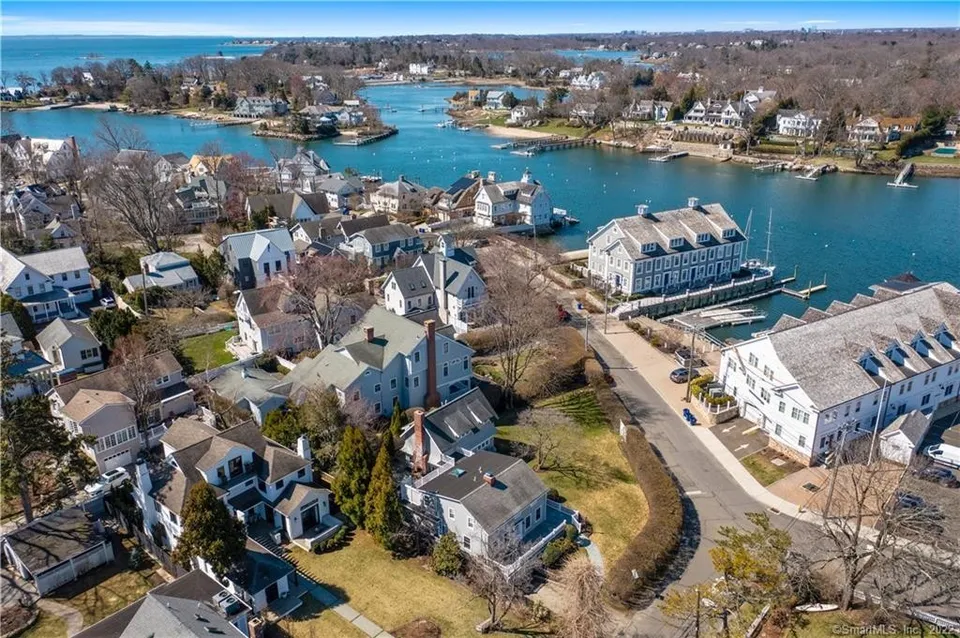
Now, let us compare this to Norwalk. It is cheaper. The median home price is closer to $530,000 to $550,000. Price per square foot runs $270 to $330. That is a real gap. For the same money, you get more space in Norwalk.
But there is a catch.
The Stamford market skews heavily toward condos. Over 40 percent of sales are condos. Norwalk’s market is more balanced, with a higher percentage of single-family homes on usable lots.
Winner for affordability: Norwalk.
Property Taxes & Cost Comparisons

Credit: nar.realtor
Property taxes are non-negotiable. Stamford property tax rates are higher than the national average, around 2.1% of property value annually. A $700,000 home translates to roughly $14,700 per year.
Norwalk’s property tax is slightly lower at about 2.0%. That same $700,000 home would cost about $14,000 per year.
Here is what a typical three-bedroom home costs monthly:
- Stamford: $7,500 to $9,500 per month
- Norwalk: $6,500 to $8,000 per month
The difference is about $1,000 to $1,500 every month. Over a year, that is real money.
Schools for Your Kids: Public Schools & Educational Options

Credit: stamfordadvocate.com
This is the big one for families.
Let me be honest. Neither city has top-tier public schools. If you want A+ rated schools, you look at Darien, New Canaan, or Wilton. But those towns cost $2 million+ for a home. So you trade public schools’ rankings for affordability.
Here is the reality about high school options.
Stamford
Public schools serve about 16,000 students. Niche rates them a B overall.
They have magnet programs, IB offerings, and a genuinely diverse student body. Stamford High and the Academy of Information Technology & Engineering (AITE) are the flagship high school options.
Norwalk
Public schools serve about 11,000 students. Niche rates them below Stamford.
Brien McMahon and Norwalk High are the main high school options. The district has invested in magnet programs like the Norwalk Early College Academy.
But let us keep it real. If public school district rankings are your top priority, neither city will wow you.
What both cities offer is diversity. Your kids will go to school with kids from all backgrounds. That is valuable, but it is a trade-off.
Many families in both cities go private. Stamford has King School, a well-regarded pre-K through 12th-grade option. But private school adds $20,000 to $40,000 per year per kid. Budget for that if schools matter most.
Winner for public schools: Stamford (by a small margin).
The Vibe & Neighborhoods: Downtown Stamford vs Norwalk Character
Credit: stacizampa.com
Stamford
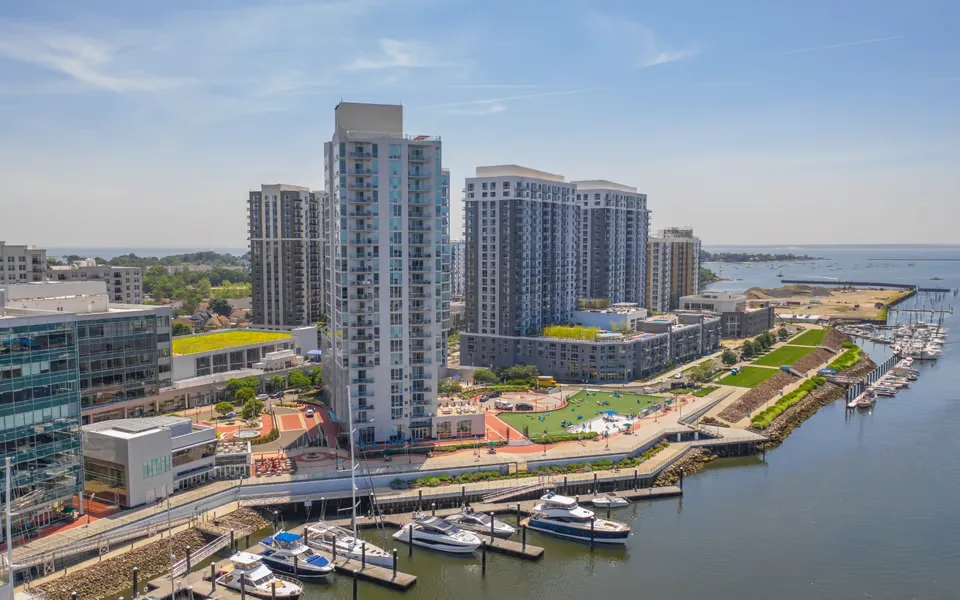
It is corporate, polished, and vertical. Downtown Stamford has high-rises, rooftop bars, and luxury condos. Harbor Point is modern and waterfront-focused. North Stamford has estates and quiet suburban streets.
Norwalk
As far as Norwalk is concerned, it is creative, layered, and horizontal. South Norwalk (SoNo) has lofts, galleries, and restaurants. East Norwalk offers waterfront living. Rowayton feels like a small village.
Stamford is polished. Norwalk is authentic. Choose based on what you value.
Winner for character: Norwalk.
Looking at other Connecticut comparisons? Check out this blog on Danbury vs Norwalk analysis to see how Norwalk stacks up against another emerging market.
Parks, Food & Daily Life: What Makes These Communities Work

Credit: stamfordadvocate.com
Let us talk about everything else. Because where you live affects your daily life.
Parks & Recreation
Norwalk wins here. It has more parks, including Cummings Park and Calf Pasture Beach. Stamford has nice parks too, but fewer waterfront spaces.
Grocery Shopping & Dining
- Stamford has Trader Joe’s
- Norwalk has Stew Leonard’s
- Norwalk will soon have a Wegmans.
Pet Friendliness
Norwalk wins due to more green space and parks.
Dining & Entertainment
Stamford offers more upscale dining. Norwalk offers more local character and variety, especially in SoNo.
Winner for daily life: Norwalk (slightly).
Property Management & Home Ownership: What You Should Know
If you are a property owner, both cities offer strong property management services. A property management company can help with:
- Tenant screening and placement
- Rent collection and accounting
- Maintenance coordination
- Legal compliance
- Tax and documentation tracking
Consider whether you will self-manage or hire a property management company when budgeting.
Need Help Managing Your Investment?
As a real estate professional specializing in the Norwalk and Stamford markets, I don’t just help you find the right property; I help you maximize its potential. Whether you are looking for professional management recommendations or need a dedicated partner to oversee your local portfolio, I am here to streamline the process for you.
Contact me today to discuss your property management needs and investment goals.
Conclusion
Norwalk vs Stamford is not about a winner. It is about fit. Both cities offer strong advantages depending on your lifestyle.
Choose Stamford if:
- You commute to NYC four or more days a week
- You prefer an urban, high-energy vibe
- School rankings matter a lot
- You want the fastest NYC access
Choose Norwalk if:
- You want more space for your money
- Want more value character over polish
- You can handle a longer commute
- You have started preferring a more authentic community feel
Both cities are great in their own way. Visit both and experience them in person before deciding.
Frequently Asked Questions
These are the most common questions families have when comparing the two cities.
Which city has better schools, Norwalk or Stamford?
Stamford has a slight edge. Its public schools are rated slightly higher overall. Both districts offer magnet programs and diversity.
Is Norwalk cheaper than Stamford?
Yes. Norwalk is about 10–15% cheaper for housing and has slightly lower property taxes.
Which city has a shorter commute to NYC?
Stamford wins. Express trains take 45 to 60 minutes to Grand Central compared to 60 to 75 minutes from Norwalk.
Which city is better for families with young kids?
Norwalk. It offers more parks, more space, and generally larger residential lots.
Can you live in Stamford or Norwalk without a car?
Not easily. Both cities have walkable areas, but a car is generally necessary for groceries and school transportation.